

 English
 русский
 Español
 简体中文
简体中文

Flange Nut
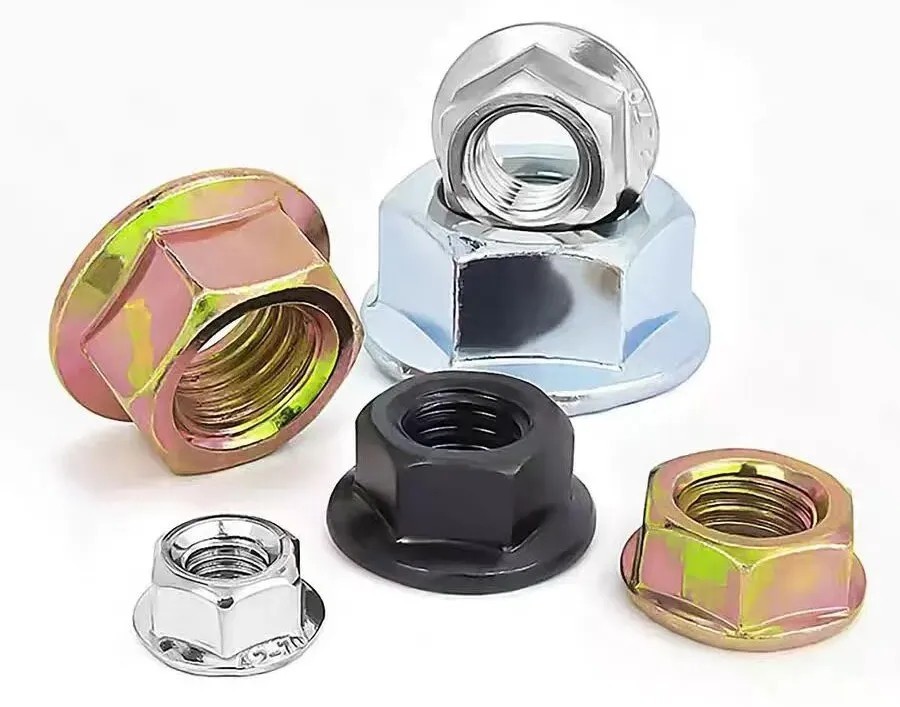
In machine shops and pipeline construction sites, are these complaints familiar? Ordinary nuts tend to "break down" under vibration or heavy loads, not only delaying the project but also posing safety hazards. But experienced technicians know that replacing them with a nut that has a disc often solves the problem—that's the flange nut. Today, we'll explain this "anti-loosening magic weapon" in detail.
What are flange nuts?
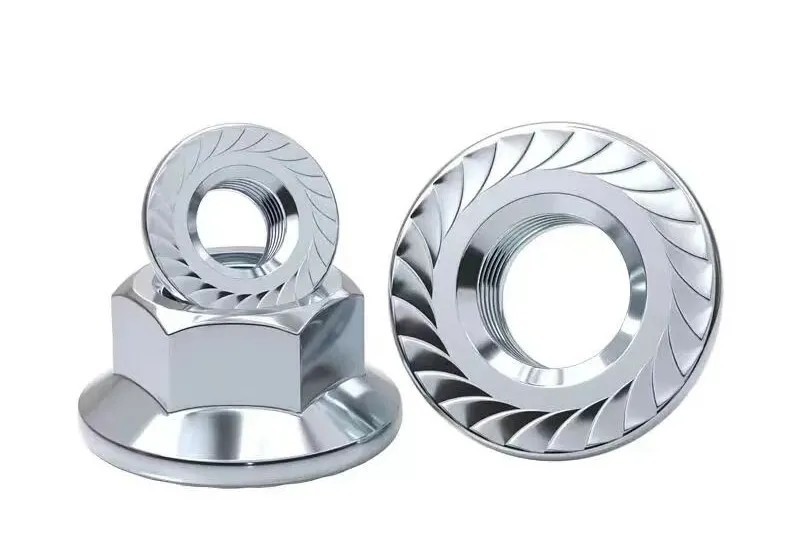
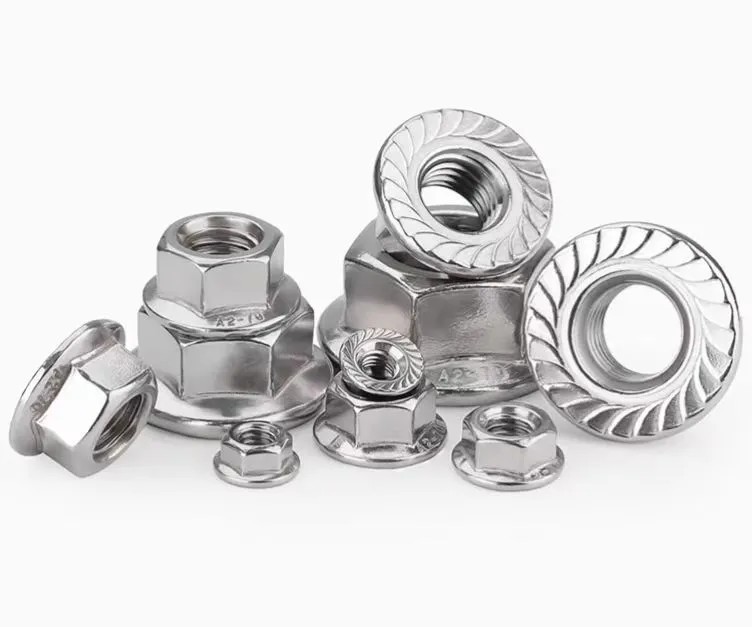
The spring-loaded nut, also known as a washer-loaded nut or serrated nut, differs from a regular hexagonal nut in appearance—it has a large "flange" at one end, like a "flat shoe" for the nut, with some flanges featuring fine serrations or wavy lines. Don't underestimate this design; it's key to its stability.
Compared to a regular nut, it eliminates two steps: no extra washer is needed, allowing for one-step installation; and there's no need to repeatedly check for misaligned washers, greatly improving assembly efficiency. Especially in high-altitude operations or confined spaces, this "integrated" design saves workers a lot of effort.
The core of flange nuts
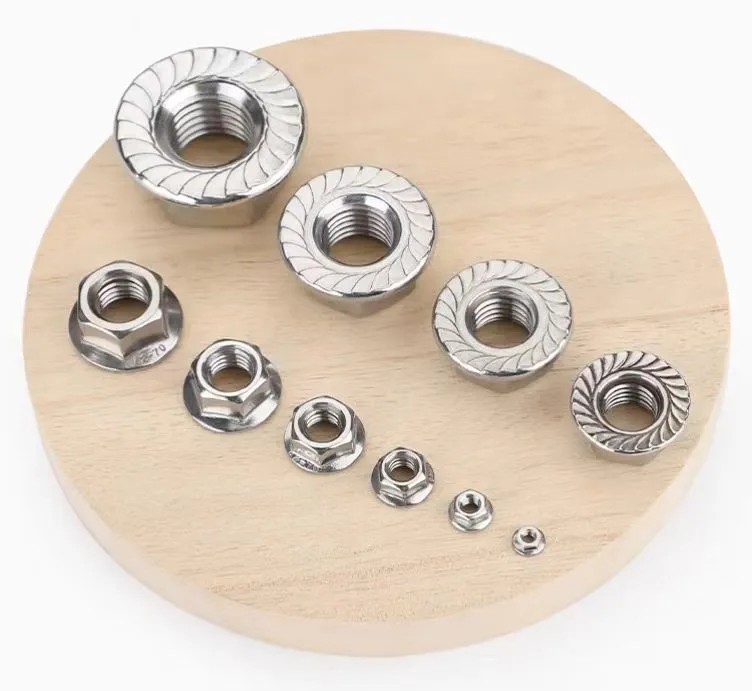
The root cause of loosening ordinary nuts lies in concentrated pressure and insufficient friction. Flange nuts solve this problem through three design features, which we'll discuss one by one:
Pressure Dispersion: Transforming "Needle-Point Force" into "Planar Force"
The wide flange distributes the tightening force of the nut evenly across the surface of the connected parts, with a contact area 3-5 times larger than that of ordinary nuts. This prevents indentation on the workpiece surface and avoids thread stripping caused by excessive localized stress, reducing the risk of loosening at its source.
Mechanical Engagement Lock: Serrated Teeth as "Anti-Slip Claws"
When tightening a toothed flange nut, the serrated teeth engage like claws on the surface of the connected parts, forming a mechanical lock. This "physical locking" is more reliable than relying solely on thread friction to prevent loosening; even with high-frequency vibrations in the equipment, the nut will not "rotate and slip off."
Sealing Auxiliary Function: Blocks Impurities for Enhanced Durability
The flange fits tightly against the workpiece surface, providing a certain degree of sealing to prevent dust, oil, and water stains from entering the threaded gaps, reducing corrosion and rust, and extending the service life of the connection.
Flange Nut Avoidance Guide
Flange nuts are not suitable for all scenarios; choosing the wrong type can be a waste of money. Remember these key selection points:
Light-load, vibration-free scenarios
For applications such as fixing home wardrobes or assembling light-duty shelves, ordinary nuts are perfectly adequate. The anti-loosening advantage of flange nuts is unnecessary and only increases costs.

For extra-large sizes, confirm availability before ordering
Flange nuts smaller than M20 are common, but those larger than M20 are mostly flat and toothless designs, and manufacturers generally don't keep them in stock. They need to be custom-made in advance to avoid delays caused by last-minute orders.

In high-temperature/high-corrosion environments, material is key
Ordinary A3 steel flange nuts are not resistant to high temperatures and corrosion. If used in chemical pipelines or boiler equipment, 35CrMoA alloy material must be selected, and the surface should preferably be hot-dip galvanized for stronger corrosion resistance.
| Applicable Scenarios | Recommended Types | Material Recommendations | Implementation Standard |
| Household appliances, light-duty shelving | Standard Flange Nuts (Untoothed) | A3 Low Carbon Steel | GB/T 6177.1-2016 |
| Motors, water pumps, vibrating screens | Locking Flange Nuts (Toothed) | 45# Steel | GB/T 6177.1-2016 |
| Construction machinery, automobile chassis | High-Strength Flange Nuts | 40Cr/35CrMoA | GB/T 6177.1-2016 |
Usage Precautions
The core principles of flange nut usage are "correct type selection + standardized installation + suitable operating conditions" to avoid loosening or failure due to improper selection or operation.
I. Type Selection and Matching: Correct selection is fundamental (select type according to operating conditions, material suitable for the environment, and precise specification correspondence).
II. Installation and Operation: Details determine stability (clean the mating surfaces, control tightening torque, and avoid using additional washers).
III. Suitable Operating Conditions: Avoid usage pitfalls (avoid misuse in certain scenarios, provide protection for special environments, and prohibit mixing materials).
IV. Maintenance and Inspection: Extend service life (regular inspections, timely replacement of malfunctioning nuts, and avoidance of reuse).