

 English
 русский
 Español
 简体中文
简体中文

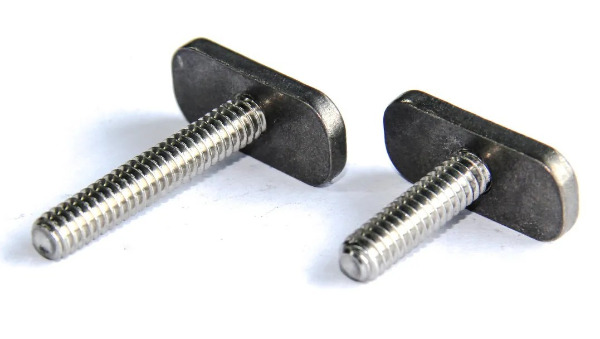
In fields such as machinery manufacturing, rail transportation, and building structures, standard bolts often cannot meet special assembly requirements. Especially when rapid installation, precise positioning, or high load bearing is required, non-standard T-bolts, with their unique structure and high adaptability, have become the ideal choice for solving complex fastening needs.
What are Non-Standard T-bolts?
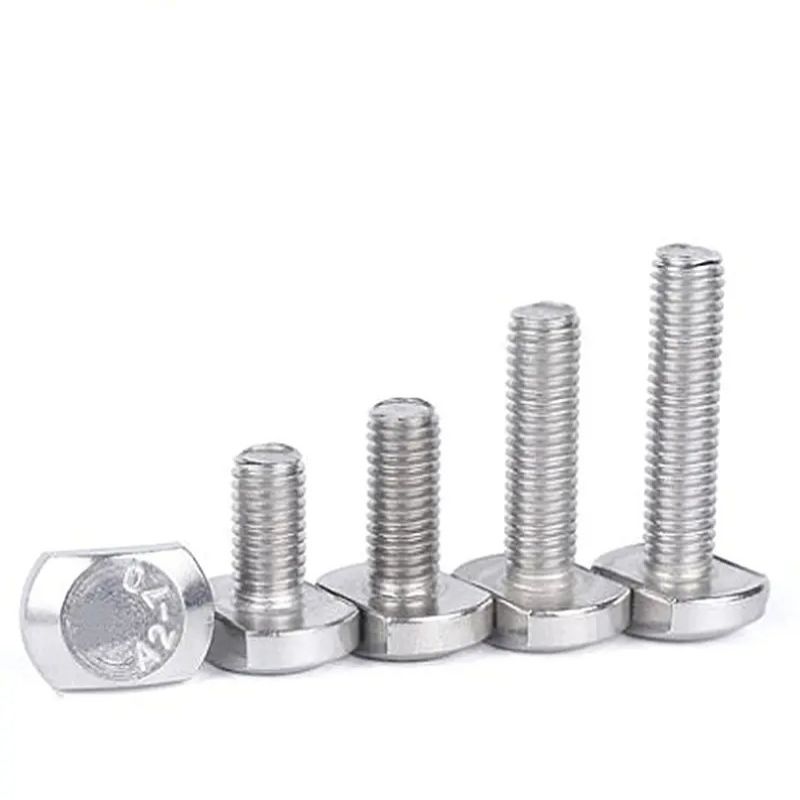
Non-standard T-bolts are fasteners designed to meet specific needs. The bolt head is T-shaped, allowing direct insertion into a pre-made slot and automatic locking without additional positioning. They are widely used in industrial aluminum profile frames, machine tool guideways, solar photovoltaic brackets, steel structure connections, and other fields, providing stable and reliable fastening solutions for various equipment and structures.
Compared to standard T-bolts, non-standard T-bolts can be customized in terms of thread length, head shape, material, and surface treatment to adapt to different working environments and load requirements.
Features of Non-Standard T-bolts
1. Optimized Structural Design, Convenient Installation
The T-head can be directly inserted into the profile groove without additional rotation or adjustment, greatly improving assembly efficiency.
It fits tightly with the slide groove, forming a stable locking structure to prevent loosening and misalignment.
2. Customizable Sizes and Specifications
Thread Specifications: Metric M6, M8, M10, etc., or UNC standard are available to suit different connection requirements.
Head Size: The width, thickness, and length of the T-head are customized according to the profile groove width to ensure a match with the rail or profile.
Length Customization: Standard or extended specifications can be selected according to assembly needs to meet different structural fastening requirements.
3. Material and Strength Selection
Carbon Steel T-bolts: Suitable for high-strength applications, heat-treated to improve hardness and wear resistance.
Stainless Steel T-bolts: Highly corrosion-resistant, suitable for outdoor equipment, marine engineering, or chemical environments.
Alloy Steel T-bolts: Possess higher mechanical strength and fatigue resistance, suitable for high-load structures. 4. Multiple surface treatments for enhanced durability
Zinc plating: Enhances oxidation resistance and prevents rusting; suitable for general industrial environments.
Dacromet plating: Highly resistant to salt spray corrosion; suitable for marine or high-humidity environments.
Blackening treatment: Enhances wear resistance; suitable for high-precision machinery.
Electrophoretic coating: Improves aesthetics and provides additional corrosion protection.
What makes non-standard T-bolts "non-standard"?
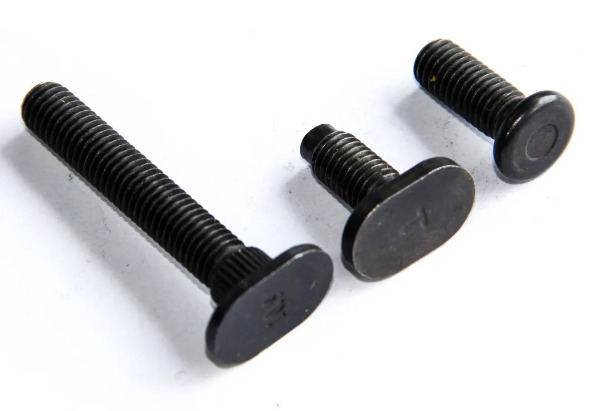
The core advantage of T-bolts is their ability to directly snap into the grooves of aluminum profiles or steel structures, enabling rapid positioning and installation. Non-standard T-bolts, however, are customized based on the standard model, focusing on three core dimensions:
1. Size Customization
The T-shape of the head is adjusted according to the specific width and depth of the groove; the bolt length is shortened or lengthened according to installation space limitations; and even special thread specifications are customized to fit non-standard nuts.
2. Material Customization
Standard T-bolts are mostly made of carbon steel and stainless steel, while non-standard products can use special materials such as alloy steel, titanium alloy, and copper alloy to meet requirements for corrosion resistance, high temperature resistance, and high strength.
3. Process Customization
Surface treatments can be customized, including galvanizing, nickel plating, blackening, and Dacromet coating; thread precision can be improved as needed; and in some high-strength applications, heat treatment can be added to enhance the bolt's tensile and shear strength.
Manufacturing Process of Non-Standard T-bolts
Material Preparation: Select suitable materials according to customer requirements and cut them into appropriate blank sizes.
Head Forming: Manufacture the T-head using hot forging or cold heading processes to ensure precise dimensions and strength.
Thread Machining: Precisely machine the threads using CNC machine tools or thread rolling machines to ensure thread finish and durability.
Surface Treatment: Select appropriate anti-corrosion treatments based on the application environment to improve the bolt's durability and corrosion resistance.
Quality Inspection: Use thread gauges, hardness testers, and other instruments to inspect dimensional accuracy, surface finish, mechanical properties, and other indicators to ensure product compliance with standards.
When customizing non-standard T-bolts, pay attention to these 3 points!
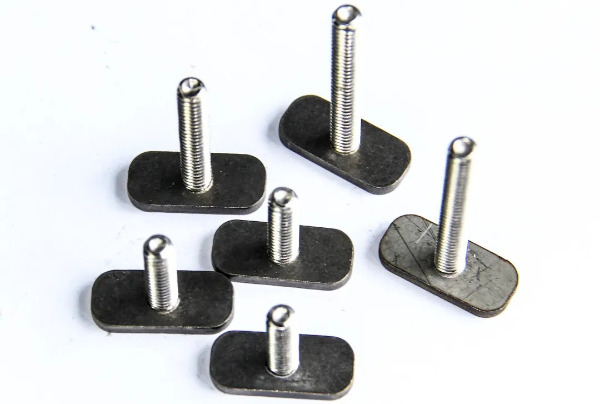
Clarify Requirements: Before customization, be sure to provide detailed parameters such as the groove dimensions, installation space, load-bearing requirements, and operating environment. Accurate requirements are the prerequisite for customizing qualified products.
Choose a Reliable Manufacturer: Non-standard products have higher requirements for production processes and quality testing. Prioritize manufacturers with extensive customization experience who can provide material reports and testing reports.
Sample Testing First: Before mass customization, always make samples for installation and strength testing. Confirm that they meet the requirements before mass production to avoid losses due to parameter deviations.
The Value of Non-Standard T-bolts
Non-standard T-bolts, with their unique design and wide applicability, play a vital role in industrial production, construction engineering, and machinery assembly. Their precise, customized design not only improves installation efficiency but also ensures connection stability and durability.
If your project has special requirements for fasteners, non-standard T-bolts are the ideal choice. Customized sizes, materials, and surface treatments based on the specific application environment ensure optimal connection results, making your equipment safer and more reliable. For any questions, please contact the Jiangxin team.