

 English
 русский
 Español
 简体中文
简体中文

Content
Stainless Steel Fasteners
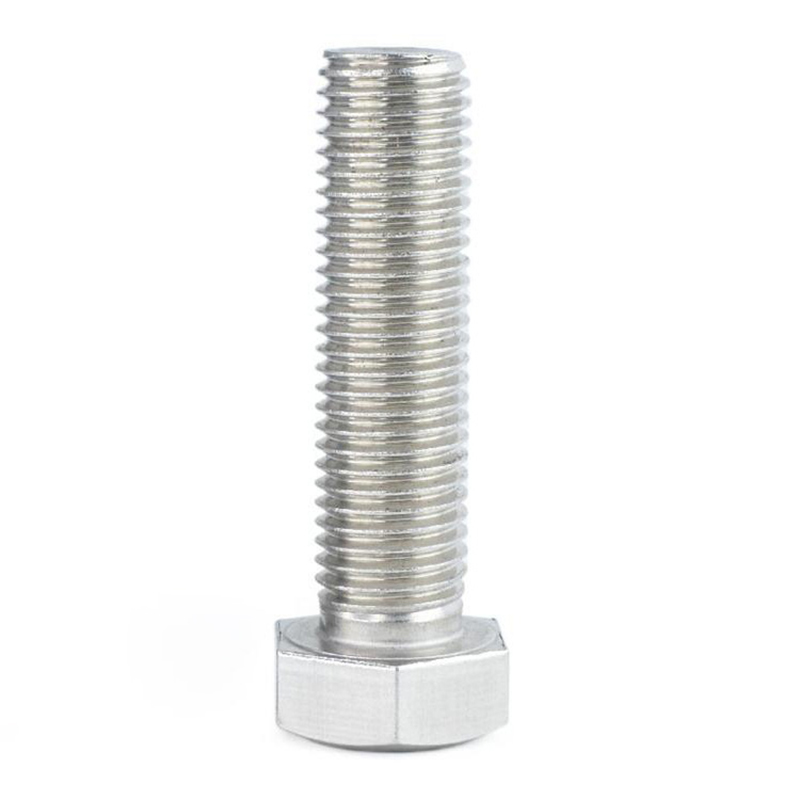
In the realm of hardware fasteners, stainless steel is widely utilized across various engineering and manufacturing sectors due to its exceptional corrosion resistance and mechanical properties. However, different grades of stainless steel possess distinct characteristics and are suited for specific applications. Today, we will take a deep dive into several of the most common stainless steel fastener materials—demystifying their properties to help you make your selection with greater confidence.
How to Select the Appropriate Stainless Steel Material
When selecting stainless steel hardware fasteners, the following factors should be considered comprehensively:
Environmental Conditions: For environments such as marine or chemical settings, it is recommended to select the A4 series or B8M series.
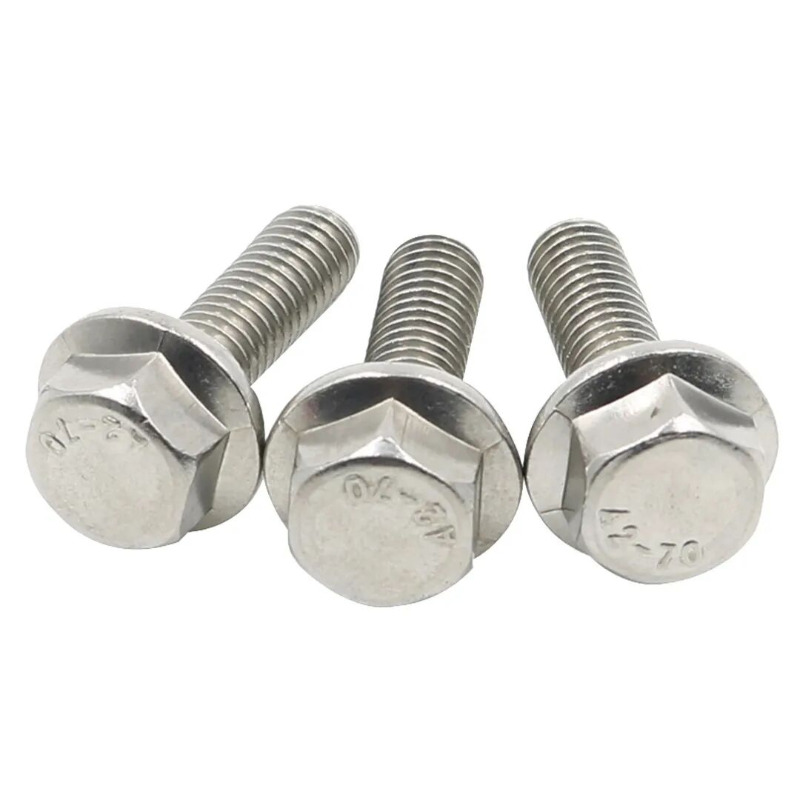
Load Requirements: Select a material with appropriate yield strength based on the magnitude of the load—for example, A2-70, A2-80, A4-70, or A4-80.
Standard Requirements: Select a material that complies with the relevant standards specific to the intended application—for instance, the F593 series.
201 Stainless Steel (Economical Grade)
This is an economical, low-nickel, high-manganese austenitic stainless steel. Its core principle involves substituting a portion of the nickel with manganese to reduce costs, making it the most common low-cost alternative to 304 stainless steel.
Features: Low cost, high manganese content, moderate corrosion resistance.
Suitable Environments: Dry indoor settings, non-corrosive conditions, absence of salt spray, light-load applications.
Typical Applications: Indoor furniture, standard doors and windows, decorative components, non-load-bearing hardware.
Disadvantages: Highly susceptible to rusting in humid, coastal, or acidic/alkaline environments.
304 Stainless Steel (General-Purpose / Most Widely Used)
Currently the most mainstream, cost-effective, and widely applied stainless steel grade available; it serves as the default choice for hardware fasteners.
Key Features: Offers the best overall performance, featuring excellent corrosion resistance, rust prevention, and toughness.
Suitable Environments: Versatile for both indoor and outdoor use; suitable for mildly humid conditions, general atmospheric environments, and settings free from strong acids, strong bases, or high coastal salt-spray concentrations.
Typical Applications: Mechanical equipment, building curtain walls, pipe supports, lighting fixtures, home appliances, and general outdoor structures.
Positioning: The premier choice for industrial fasteners—the undisputed "King of Value."
316 Stainless Steel (Corrosion-Resistant, Premium Grade)
A premium-grade, corrosion-resistant stainless steel—often referred to as "marine-grade steel"—it is the material of choice for applications situated in highly corrosive environments.
Key Features: Contains molybdenum; offers exceptional resistance to chloride ion corrosion, salt spray, acids, and alkalis.
Suitable Environments: Coastal regions, salt-spray environments, sewage treatment facilities, marine environments, and high-temperature/high-humidity or highly corrosive industrial conditions.
Typical Applications: Marine vessels, seaside architecture, chemical processing equipment, seawater pumps and valves, and high-end outdoor fasteners.
Positioning: The essential choice for applications with stringent corrosion resistance requirements.
A Must-Read for Stainless Steel Fasteners
Strength Grades
Unlike carbon steel, which is designated by grades such as 8.8 or 10.9, stainless steel is denoted using codes such as A2-70 and A4-80.
A2-50: 304 (Annealed/Soft State) — Low Strength
A2-70: 304 — Standard Strength (Most Commonly Used)
A4-70: 316 — Standard Strength
A4-80: 316 — High Strength (Corrosion Resistance + High Strength)
Engineering Default: Unless otherwise specified, a reference to "stainless steel bolts" generally implies the A2-70 (304) grade.
How to Quickly Select Materials (A Highly Practical Guide)
Indoor, Dry Environments; Cost-Effective → 201
General Machinery; Standard Outdoor Use; High Value-for-Money → 304 (A2-70)
Coastal Areas; Salt Spray; Chemical Environments; Seawater Exposure → 316 (A4-70 / A4-80)
Highly Corrosive Environments + High Strength Requirements → 316 A4-80
Common Misconceptions (Extremely Important)
X Assuming "Stainless Steel = Never Rests"
→ Grade 304 *will* rust when exposed to strong acids, coastal environments, or prolonged water accumulation.
X Settling for Grade 304 in coastal areas
→ It *will* rust within six months; Grade 316 is mandatory.
X Choosing strength specifications arbitrarily
→ For heavy-duty applications, you *must* select Grade 70 or Grade 80; the softer Grade 50 is unsuitable.
We hope this article serves as a valuable reference for you when selecting stainless steel hardware fasteners. If you have any further questions, please feel free to leave a comment in the discussion section or contact our team at Jiangxin.