

 English
 русский
 Español
 简体中文
简体中文

Jiangxin Fasteners
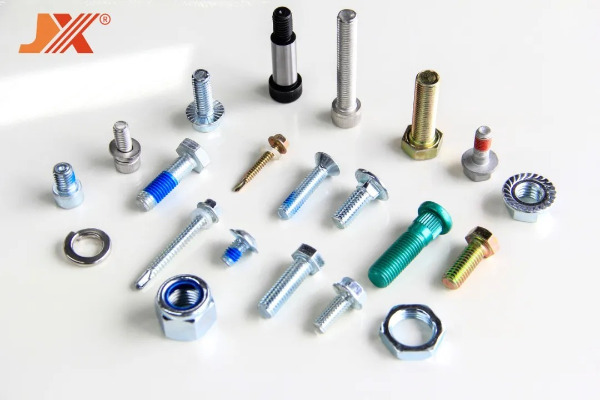
Bolts, as one of the most common fasteners, play a crucial role in various applications due to the shape of their heads. Whether in the assembly of mechanical equipment or the fixing of building structures, the choice of bolt head directly affects the stability, performance, and safety of the connection. Common bolt head shapes include cylindrical heads, flat round heads, pan heads, and countersunk heads.
Cylindrical Head Bolts
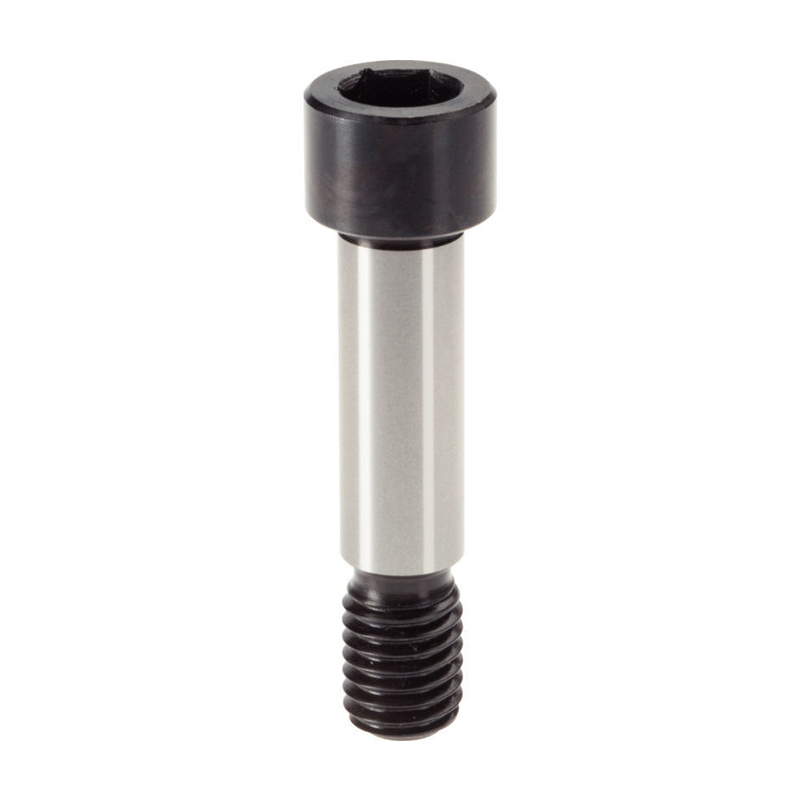
Features: Cylindrical head bolts have a cylindrical head shape with a smooth surface, providing excellent load-bearing capacity. They are typically used in structural designs where a clean head appearance and ease of operation are critical.
Applications: Cylindrical head bolts are commonly found in machinery, electronics, and mold manufacturing, suitable for applications requiring high torque. Their smooth head facilitates tightening with wrenches or power tools, making them ideal for applications with limited space but demanding high precision.
Safety and Performance: The cylindrical head design ensures that the head will not easily deform under high loads, guaranteeing the bolt's tightening force and the stability of the connection. This bolt shape can withstand greater shear forces, resulting in a more robust connection.
Flat Head Bolts
Features: Flat head bolts have a rounded, relatively flat head, making them aesthetically pleasing. They are typically used in exposed structures or products. Their larger head provides a larger stress-bearing area for the connection.
Applications: Flat head bolts are often used in applications where aesthetics are important, such as furniture, light industry, and the external structures of certain mechanical equipment. Their rounded head has a clean appearance, making them particularly suitable for exposed connections.
Safety and Performance: Due to their larger stress-bearing area, flat head bolts prevent excessive pressure concentration during installation, effectively reducing damage to the mounting surface. Their lower head height also prevents external scratches, enhancing the overall structural safety.
Countersunk bolts
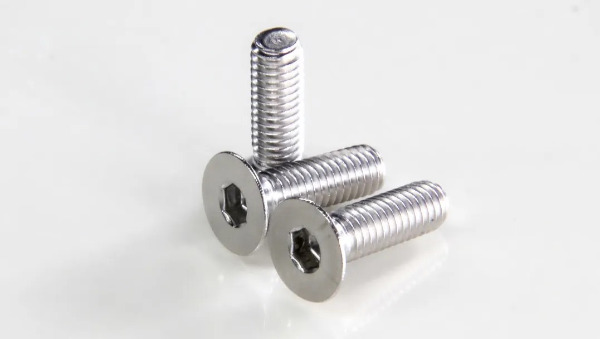
Features: Countersunk bolts have a flat or slightly recessed head, allowing the bolt to be fully embedded in the workpiece surface. After installation, it is flush with the workpiece surface without any protrusions.
Applications: Countersunk bolts are commonly used in applications requiring smooth surfaces, such as aircraft, building facades, furniture, and machinery. Because countersunk bolts do not protrude from the surface after installation, they are widely used in applications where aesthetics are important and no protrusions are acceptable, such as wood or metal structural connections.
Safety and Performance: Countersunk bolts ensure a smooth connection surface, preventing scratches or friction caused by surface protrusions, thus improving the overall structural safety. The head being embedded in the material further ensures the stability of the connection. Furthermore, countersunk bolts perform excellently in high-strength applications, providing strong tightening force and reducing the risk of loosening.
Pan head bolts
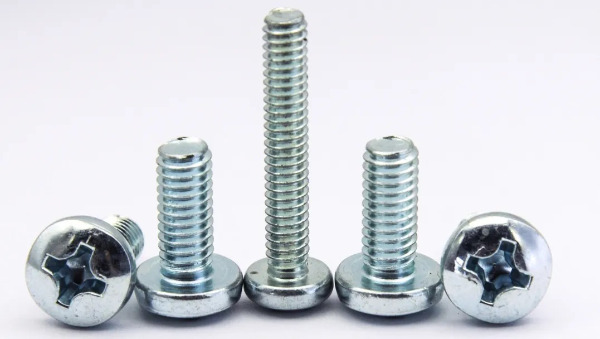
Features: Pan head bolts have a flat, slightly convex head, resembling a "plate." Compared to flat round heads, pan head bolts have a slightly thicker head, providing greater tightening force.
Applications: Pan head bolts are widely used in electronics, furniture assembly, and mechanical structures, especially in applications requiring high-strength fastening where excessive bolt head protrusion is undesirable. For example, they are very common in the joining of sheet metal or the assembly of plastic components.
Safety and Performance: Pan head bolts have a large head contact surface, which distributes the pressure applied to the bolt, preventing material damage from the bolt head. Their flat head reduces bulging, avoiding impacts on external design or personnel safety.
The Importance of Choosing the Bolt Head Shape
Different bolt head shapes directly affect the bolt's stress distribution, installation method, and appearance. Correctly selecting the bolt head shape not only improves the strength of the connected components but also enhances the safety and durability of the entire structure.
Usage Effect: By selecting the appropriate bolt head shape based on the specific scenario, optimal tightening effect and aesthetics can be ensured during use.
Safety: Choosing a suitable head shape can effectively reduce safety hazards, such as minimizing the risks posed by surface protrusions and improving the stability of the connection.