

 English
 русский
 Español
 简体中文
简体中文

Content
- 1 What is a hex bolt?
- 2 What are Carriage Bolts?
- 3 Key differences between hex bolts and carriage bolts
- 4 Common materials for hex bolts and carriage bolts
- 5 Strength Comparison: Hex Bolts vs. Carriage Bolts
- 6 Ease of Installation
- 7 Cost Comparison: Hex Bolts vs. Carriage Bolts
- 8 Corrosion Resistance and Durability
- 9 Aesthetic Considerations
- 10 When to Choose?
- 11 Frequently Asked Questions
Fasteners such as bolts play a vital role in construction, assembly, and maintenance. Among the many types, hex bolts and carriage bolts stand out due to their versatility and wide range of applications. However, when choosing between the two, specific applications, material compatibility, and required surface treatments need to be considered. This guide will provide an in-depth analysis of the characteristics, uses, and differences between hex bolts and carriage bolts to help you make an informed choice.
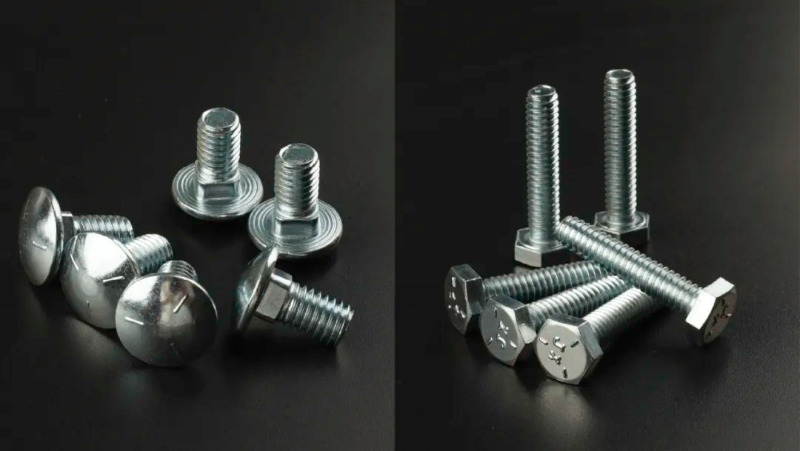
Hex bolts VS Carriage bolts
What is a hex bolt?
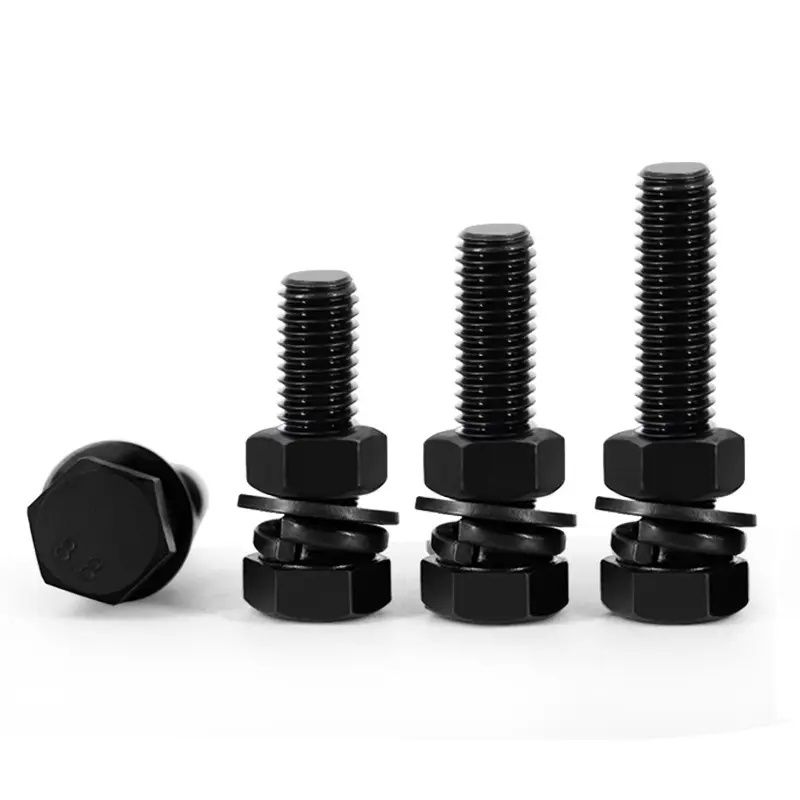
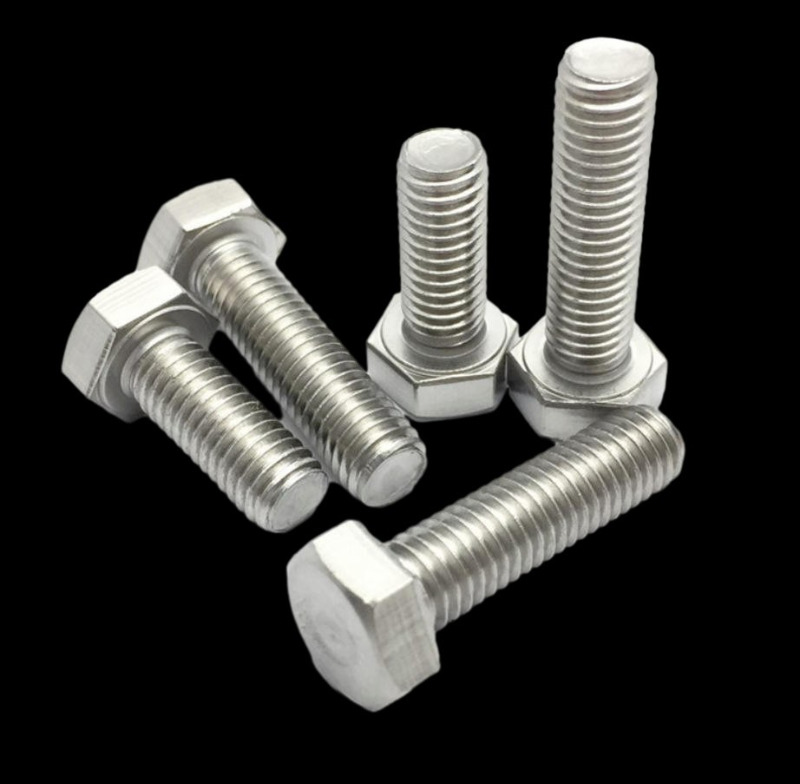
A hex bolt, also known as a hex head bolt, is a fastener with a hexagonal head. Its threaded portion provides a strong grip and is typically used with a nut or tapped hole.
Characteristics of Hex Bolts
Head Shape: The hexagonal head facilitates gripping and torque application.
Thread Type: Full or partial thread.
Material: Typically made of steel, stainless steel, or brass.
Surface Finish: Galvanized, galvanized steel, or black anodized for enhanced durability.
Applications of Hex Bolts
Hex bolts are widely used in construction, heavy machinery, and the automotive industry due to their strength and reliability.

What are Carriage Bolts?
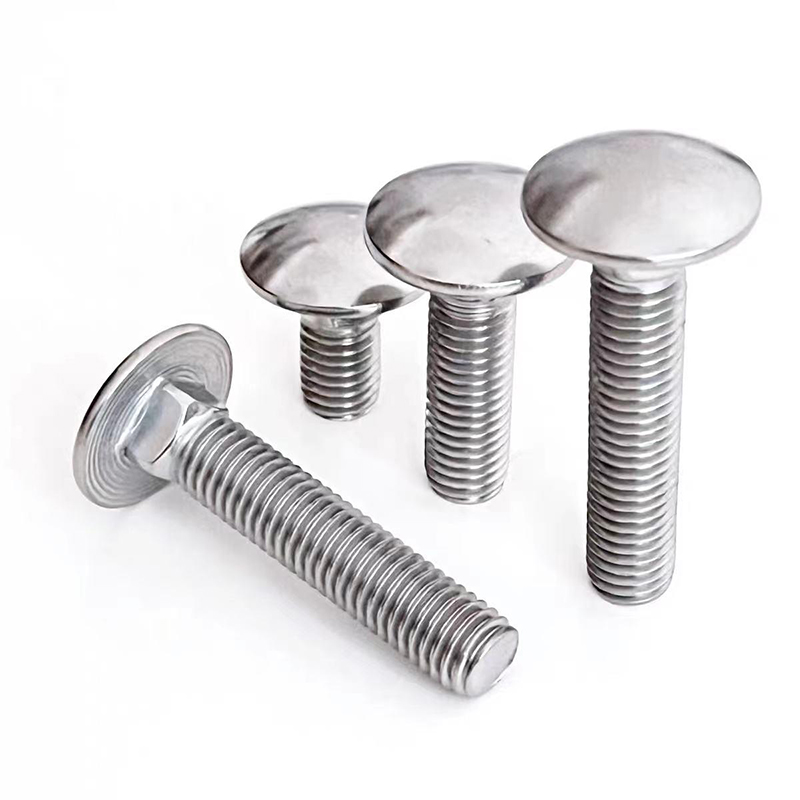
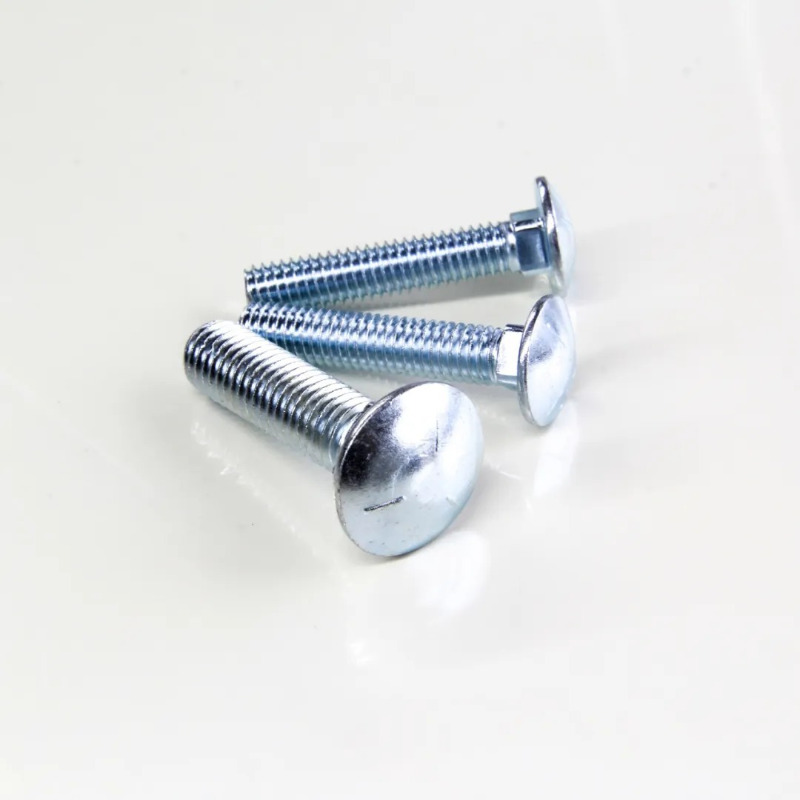
Carriage bolts, with their round or hemispherical head and square neck design, are primarily used for joining timber or timber and metal.
Characteristics of Carriage Bolts
Head Shape: Smooth, domed head for a clean appearance.
Neck Design: The square neck prevents the bolt from rotating during installation.
Material: Typically made of steel, stainless steel, or brass.
Surface Finish: Available in galvanized, galvanized steel, or untreated surfaces.
Applications of Carriage Bolts
Carriage bolts are favored in woodworking, outdoor structural, and decorative applications due to their clean appearance.
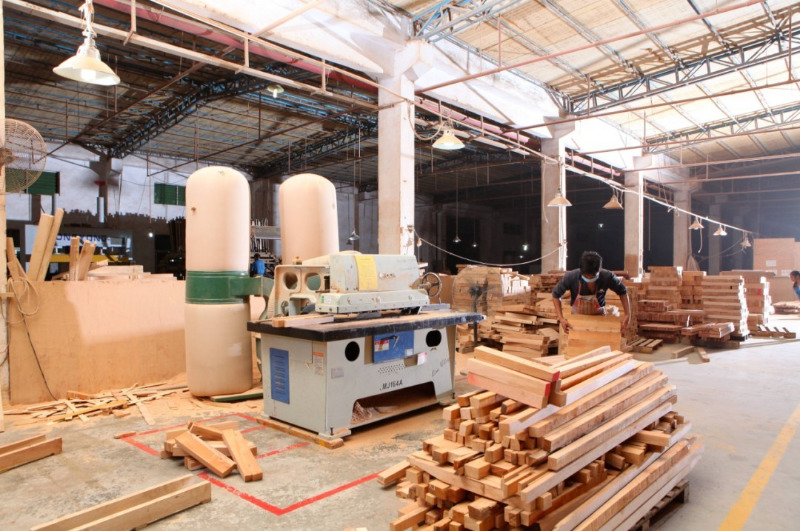
Key differences between hex bolts and carriage bolts
| Features | Hex bolts | Carriage bolts |
| Head shape | Hexagonal shape | Dome-shaped |
| Thread type | Fully or partially threaded | Fully or partially threaded |
| Mounting method | Requires a wrench or socket tool | Square neck, hammer-on fastened, nut tightened |
| Application scenarios | Industrial, automotive | Woodworking, outdoor projects |
| Aesthetics | Functional appearance | Decorative smooth finish |
Common materials for hex bolts and carriage bolts
Bolts are typically made from the following materials:
Steel: Standard option, high strength.
Stainless steel: Corrosion resistant and durable.
Brass: Used for aesthetic or electrical performance requirements.
Coating: Galvanized or zinc-plated steel surface treatment for increased protection.
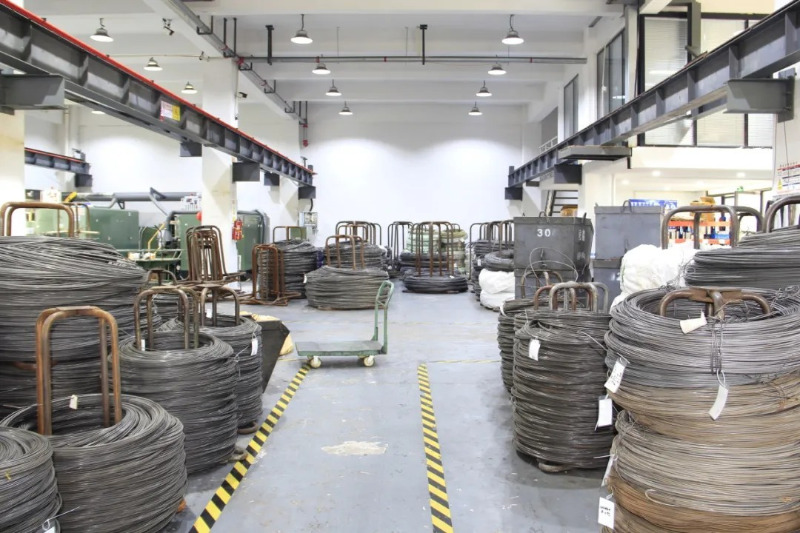
Strength Comparison: Hex Bolts vs. Carriage Bolts
Hex bolts generally have higher tensile strength, making them suitable for heavy-duty applications. While carriage bolts also have good strength, they are better suited for light loads and woodworking projects.
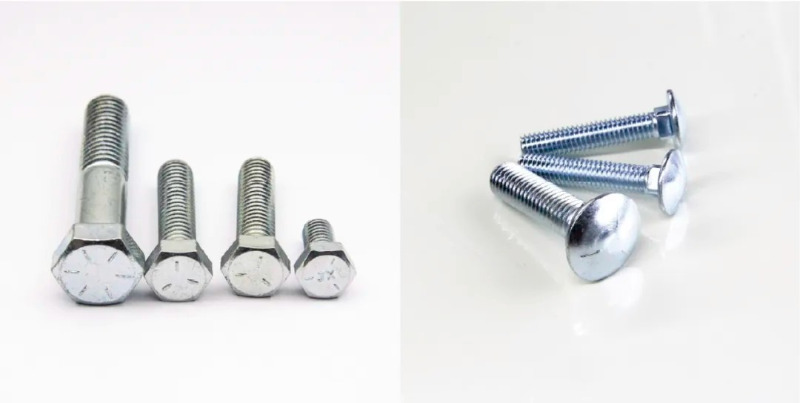
Ease of Installation
Hex bolts: Require a wrench or socket wrench; designed for easy tightening in confined spaces.
Carriage bolts: Square necks lock in position during installation, simplifying woodworking operations.
Cost Comparison: Hex Bolts vs. Carriage Bolts
Bolt costs vary depending on size, material, and surface finish. In general:
Hex bolts: Suitable for bulk industrial purchases, offering high cost-effectiveness.
Carriage bolts: Slightly more expensive due to their decorative appeal and special surface finishes.
Corrosion Resistance and Durability
Hex bolts: Require a wrench or socket wrench; designed for tightening in confined spaces.
Carriage bolts: Square necks lock in position during installation, simplifying woodworking applications.
Aesthetic Considerations
Carriage bolts, with their smooth, rounded heads, offer greater aesthetic appeal and are suitable for visible applications. Hex bolts, on the other hand, prioritize functionality and are generally not primarily characterized by their appearance.
When to Choose?
When to Choose Hex Bolts?
Scenarios for choosing hex bolts include:
When strength and durability are the primary requirements.
When the application involves metal-to-metal connections.
When the fasteners are not visible after installation.
When to Choose Carriage Bolts?
Scenarios for choosing carriage bolts include:
When a smooth, aesthetically pleasing surface finish is required.
Primarily used for wood or lightweight materials.
When the fastener needs to be decorative or visible.
Frequently Asked Questions
1. Are hex bolts suitable for woodworking projects?
Yes, but carriage bolts are better suited for woodworking applications due to their square neck design.
2. Are carriage bolts strong enough for industrial use?
Carriage bolts are strong and durable, but better suited for light to medium-strength applications and not suitable for heavy industrial use.
3. Are hex bolts prone to rust?
Hex bolts with appropriate coatings or made of stainless steel can effectively prevent rust.
4. How to choose the right bolt material?
Choose according to the environment and load requirements. Stainless steel is suitable for corrosion resistance requirements, while steel is suitable for heavy-duty requirements.
5. Are carriage bolts easy to remove?
Yes, but contact with the nut is required because the square neck design prevents the bolt from turning.
6. Are hex bolts more expensive than carriage bolts?
Cost varies depending on material and size, but hex bolts generally offer better value for money in industrial applications.